The Silent Partner: Understanding How AI Bias Shapes Our Daily Lives
A deep, non-technical exploration of how algorithmic prejudices impact your job, your finances, and your health—and why we shouldn't always trust the computer's 'objective' opinion.
## Introduction: The Invisible Roommate
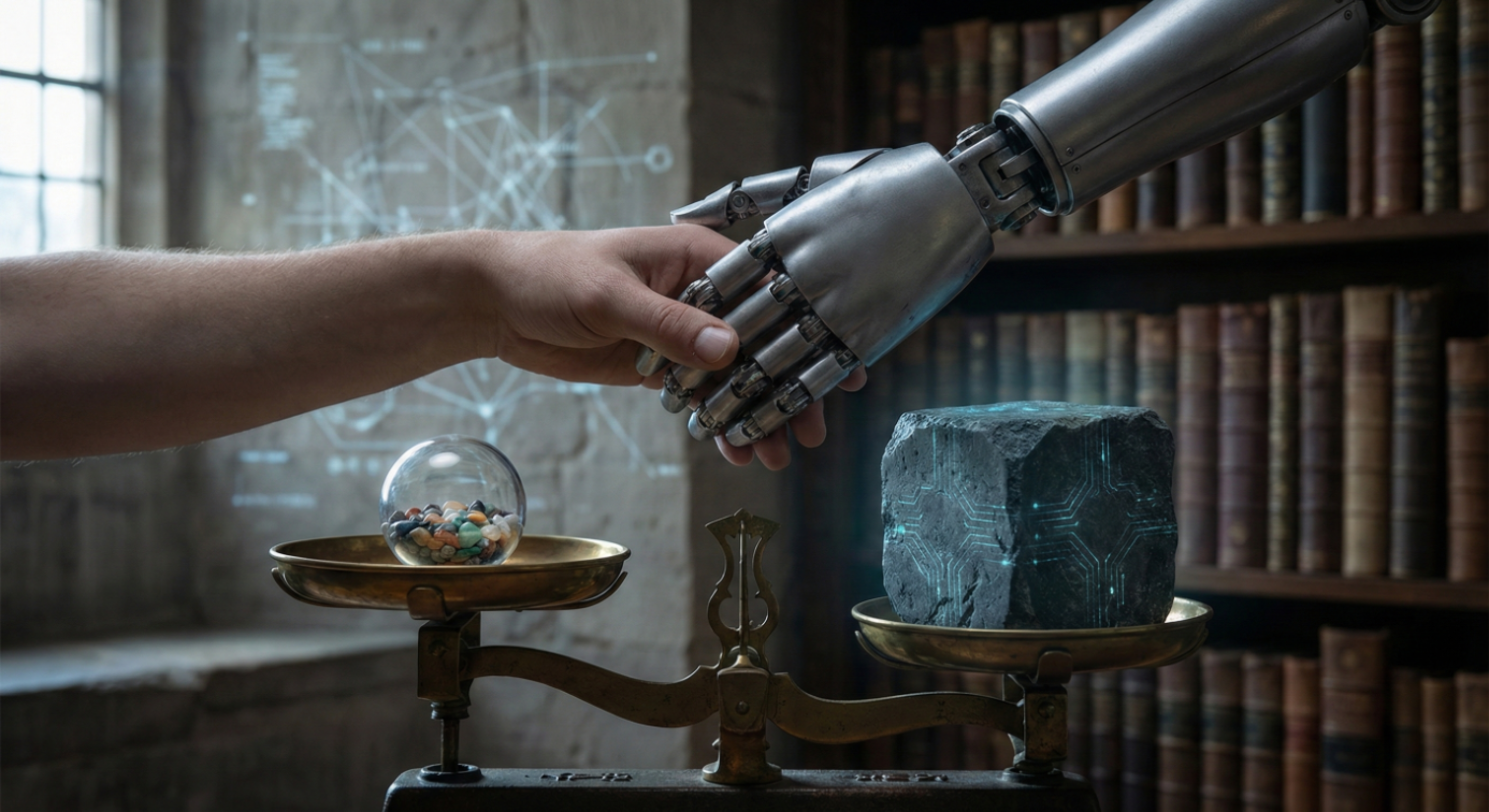
In **2026**, AI is no longer a futuristic concept; it is like a silent partner sitting in the room during every important decision. It helps your boss decide if you deserve a promotion, it helps your bank decide if you can buy a house, and it even helps your doctor suggest a treatment. We often collaborate with these systems because we think they are 'fair' and 'objective'—unlike humans, who have moods and prejudices.
However, as we peel back the curtain, we find that AI is not a neutral observer. It is a mirror. It reflects our past, including our mistakes and unfairness. This is what we call **Algorithmic Bias**. It isn’t about math; it’s about power, history, and the subtle ways we might be automating inequality.
---
## 1. The 'Ideal Candidate' Trap (In the Workplace)
Imagine you are applying for your dream job. A human recruiter uses an AI tool to filter 5,000 resumes. You have the skills, but the AI rejects you in seconds. Why?
In her book *Weapons of Math Destruction*, **Cathy O’Neil** explains that algorithms are essentially 'opinions buried in code.' If a company has historically hired people from certain elite neighborhoods or specific universities, the AI learns that these are the 'features' of success.
Instead of looking for talent, the AI looks for a 'clone' of the past. It doesn't see your potential; it only sees how much you look like the people who were already there. When the human manager collaborates with this AI, they aren't getting a 'smart' list; they are getting a list that reinforces the status quo, often excluding brilliant people from different backgrounds simply because they didn't 'fit the historical pattern.'
---
## 2. The Neighborhood Penalty (In Finance and Housing)
You go to the bank for a loan. The AI looks at your 'risk score.' You have a steady job, but the score is low. It turns out the algorithm is looking at your 'postal code' or the spending habits of people who live near you.
**Virginia Eubanks**, in *Automating Inequality*, describes this as a 'Digital Poorhouse.' The machine doesn't have to ask your race or your social class; it uses 'proxies'—hidden stand-ins—like your zip code or where you shop to make a judgment. In this collaboration, the bank officer trusts the machine's 'No' because it looks scientific, but the machine is actually just repeating old prejudices about certain neighborhoods that have existed for decades.
---
## 3. The Healthcare Gap: When 'Cost' Replaces 'Care'
In a hospital, an AI might help a doctor decide which patients need extra attention. You would assume the AI looks at how sick a person is. But as research has shown, many algorithms were designed to look at 'how much the patient spent on healthcare in the past' as a way to measure how much care they need.
This creates a tragic bias. Many people who are very sick but have low incomes don't spend much on doctors because they can't afford it. The AI sees 'low spending' and assumes 'not very sick.' When the doctor collaborates with this AI, they might accidentally overlook someone in a life-threatening condition just because the computer didn't flag them as 'expensive' enough to be a priority.
---
## 4. Why Do We Believe the Machine? (The Psychology of Trust)
Why don't we just ignore the AI when it's wrong? In *The Alignment Problem*, **Brian Christian** explores a concept called **Automation Bias**. As humans, we have a psychological tendency to trust a computer's printout more than our own intuition. We think, 'The computer analyzed millions of data points, it must know something I don't.'
This creates a 'Yes-Man' dynamic. Instead of the human and AI challenging each other, the human becomes a 'rubber stamp' for the machine's decisions. We stop asking *why* and start just saying *yes*.
---
## 5. How We Can Reclaim the Collaboration
Fixing this doesn't require learning to code; it requires a shift in how we think. As **Safiya Umoja Noble** argues in *Algorithms of Oppression*, we must stop treating technology as a god and start treating it as a flawed tool.
* **Ask for the 'Why':** If a computer makes a suggestion, we should demand to see the 'reasoning' in plain language.
* **Embrace Diversity:** The people building AI should be as diverse as the people using it to ensure 'blind spots' are covered.
* **The Human Veto:** We must ensure that a human always has the final word and the courage to say, 'The machine is wrong.'
---
## Conclusion: The Moral Compass
AI is a powerful engine, but it doesn't have a moral compass. That is our job. In the collaboration between human and machine, we are the ones responsible for fairness, empathy, and justice. We must ensure that as we build the world of tomorrow, we aren't just using faster machines to repeat the mistakes of yesterday.
### References for Further Reading:
* **Cathy O'Neil**, *Weapons of Math Destruction*: How data increases inequality.
* **Safiya Umoja Noble**, *Algorithms of Oppression*: How search engines reinforce stereotypes.
* **Virginia Eubanks**, *Automating Inequality*: How high-tech tools profile and punish the poor.
* **Brian Christian**, *The Alignment Problem*: How we try to teach machines human values.
* **Reid Blackman**, *Ethical Machines*: A guide to building responsible AI.